

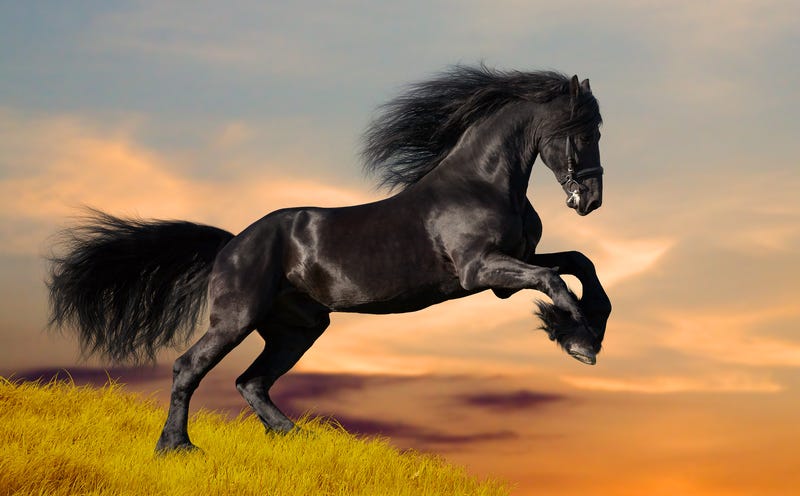
The world of heavy horses is filled with fascinating breeds, each with its own unique history, appearance, and abilities. Among the most admired are the Friesian horse and the Percheron. While both are large, powerful, and versatile, they represent two distinct types: the baroque Friesian, known for its elegance and history, and the draft Percheron, celebrated for its strength and work ethic. Understanding the differences between these two breeds helps equestrians, enthusiasts, and prospective owners make informed choices based on their needs and preferences.
In this article, we’ll explore the origins, physical characteristics, temperament, and uses of both breeds. We’ll also provide practical insights into care, grooming, and suitability for various equestrian disciplines. If you’re considering adding a heavy horse to your stable or simply want to appreciate the diversity of equine breeds, this comparison will offer valuable guidance.
For a deeper look at one of these remarkable breeds, the complete guide to Friesian horses covers everything from history to modern uses.
Historical Roots: From Medieval Europe to Modern Fields
Both the Friesian and Percheron breeds have deep roots in European history, but their stories diverge in fascinating ways. The Friesian horse hails from Friesland in the Netherlands, with records dating back to the Middle Ages. Originally bred as war horses, their agility and striking appearance made them favorites among knights and nobility. Over the centuries, Friesians transitioned from battlefield mounts to carriage horses and, more recently, to stars in dressage and driving competitions. Their baroque build and flowing manes have made them icons of elegance and power.
In contrast, the Percheron originates from the Perche region of France. This breed developed as a robust draft horse, valued for its strength, stamina, and willingness to work. Percherons were essential for agriculture, hauling, and transportation, especially before the advent of mechanized farming. Their adaptability allowed them to thrive in both rural and urban environments, pulling everything from plows to fire engines.
For more on the Friesian’s historical significance, see this overview of the Friesian horse’s long history.
Physical Characteristics: Comparing Build and Appearance
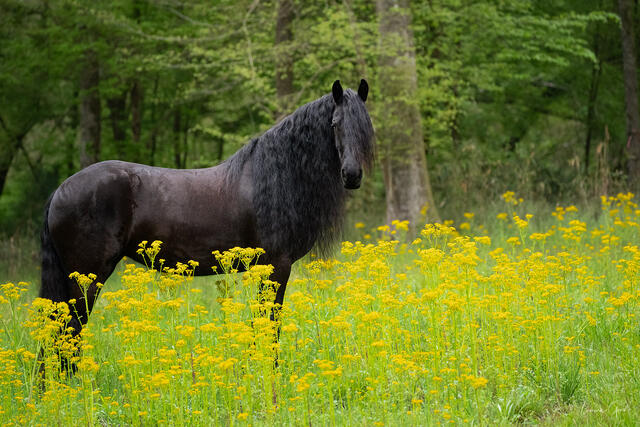
When it comes to looks, the contrast between these two breeds is immediately apparent. The Friesian is classified as a baroque horse, known for its arched neck, compact body, and expressive movement. Most Friesians are solid black, with luxurious feathering on their lower legs and a thick, wavy mane and tail. They typically stand between 15.2 and 17 hands high (about 62 to 68 inches at the withers) and have a refined yet powerful presence.
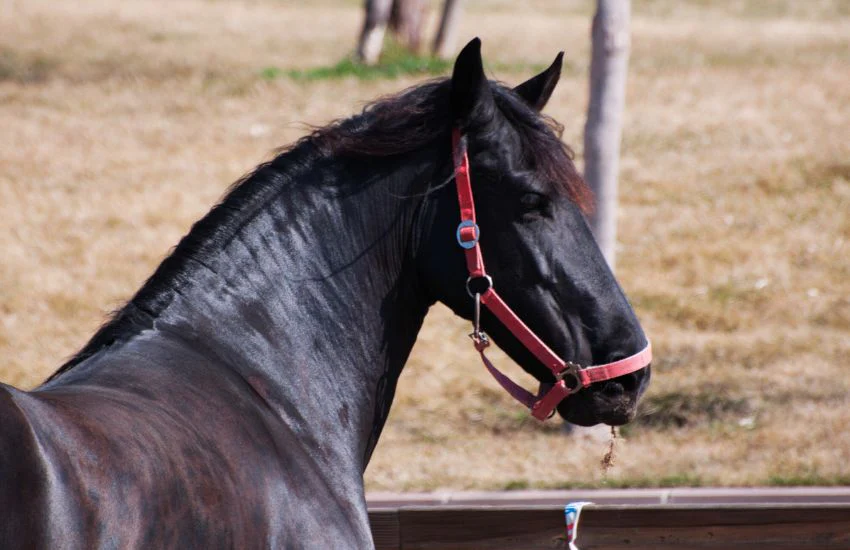
The Percheron, on the other hand, is a classic draft breed. Percherons are larger and more muscular, with a broad chest, strong hindquarters, and a straight or slightly convex profile. Their coats are usually gray or black, though other colors can occur. Percherons often stand 16 to 18 hands high (64 to 72 inches), and some individuals can weigh over 2,000 pounds. Unlike Friesians, Percherons have minimal feathering and a more utilitarian appearance, reflecting their working heritage.
Temperament and Trainability: Personality Traits in Focus
Temperament is a key factor when choosing between these breeds. Friesians are renowned for their gentle, willing nature. They are intelligent, eager to please, and form strong bonds with their handlers. This makes them suitable for riders of varying experience levels, especially in disciplines that require sensitivity and responsiveness. Their expressive movement and calm demeanor are prized in dressage and exhibition settings.
Percherons are equally known for their steady, reliable disposition. Bred for hard work, they are patient, docile, and rarely spook. These horses are often described as “gentle giants,” making them excellent choices for farm work, carriage driving, and even therapeutic riding programs. While they may not have the flashy movement of Friesians, their cooperative attitude and strength make them dependable partners in demanding environments.
For those interested in understanding more about how horses communicate and behave, the resource on equine behavior and communication can be very helpful.
Uses and Disciplines: Where Each Breed Excels
Both breeds are versatile, but their strengths shine in different areas. Friesians excel in dressage, driving, and show events. Their high-stepping gaits and striking appearance make them favorites in parades, exhibitions, and even film productions. They are also used for pleasure riding and light farm work, though their primary appeal lies in the show ring and as carriage horses.
Percherons are the workhorses of the draft world. They are still used for plowing, logging, and pulling heavy loads, but their calm nature has also made them popular in carriage services, parades, and riding programs. In recent years, some Percherons have been trained for riding disciplines, including dressage and jumping, though their size and build are best suited for tasks requiring strength and endurance.
Care, Grooming, and Maintenance
Both Friesians and Percherons require attentive care, but their grooming needs differ due to their coats and feathering. Friesians need regular grooming to maintain their long manes, tails, and leg feathers. This includes detangling, washing, and conditioning to prevent matting and skin issues. Their black coats can also fade in the sun, so some owners use blankets or keep them stabled during peak daylight hours.
Percherons have less feathering but require frequent brushing to keep their thick coats clean, especially during shedding seasons. Their size means more feed, water, and larger stalls or turnout areas. Both breeds benefit from regular hoof care, dental checks, and a balanced diet tailored to their workload and metabolism.
For practical advice on daily responsibilities, the article on horse ownership responsibilities offers a helpful overview for new and experienced owners alike.
Choosing the Right Horse: Which Breed Fits Your Needs?
Deciding between a Friesian and a Percheron depends on your goals, experience, and resources. If you’re drawn to elegance, expressive movement, and a horse suited for dressage or driving, the Friesian may be the ideal choice. Their striking looks and friendly temperament make them popular for both showing and companionship.
If you need a powerful, reliable partner for farm work, carriage driving, or heavy-duty tasks, the Percheron stands out for its strength and calm nature. Their versatility and gentle disposition also make them suitable for families and therapeutic programs.
Consider factors such as space, budget, and intended use. Both breeds require significant time and resources, but the rewards of owning such magnificent animals are substantial. For those looking to deepen their connection with their horse, check out tips on how to become a better horse owner.
Frequently Asked Questions
What are the main differences between Friesian and Percheron horses?
The primary differences lie in their build, history, and typical uses. Friesians are baroque horses with elegant, arched necks, long manes, and expressive movement, often used in dressage and driving. Percherons are heavier draft horses, bred for strength and endurance, and are commonly used for farm work and pulling heavy loads.
Are Friesians or Percherons better for beginners?
Both breeds are known for their gentle temperaments, but Friesians are often preferred for their willingness and sensitivity, making them suitable for riders interested in dressage or pleasure riding. Percherons, with their calm and steady nature, are excellent for those seeking a reliable workhorse or a partner for carriage driving.
How much maintenance do Friesians and Percherons require?
Both breeds need regular grooming, hoof care, and a balanced diet. Friesians require extra attention to their manes, tails, and feathering, while Percherons need more feed and space due to their larger size. Consistent care is essential for both to maintain health and appearance.
Can Percherons be used for riding?
Yes, Percherons can be ridden and are increasingly seen in riding disciplines, including dressage and trail riding. Their size and strength make them suitable for larger riders or those seeking a steady, reliable mount.
Which breed is more expensive to own?
Costs can vary depending on location, training, and individual needs. Friesians often command higher purchase prices due to their rarity and show appeal, while Percherons may have higher ongoing costs for feed and care due to their size.
For more insights into balancing horse care with daily life, see these equestrian lifestyle tips.