

Friesian horses are instantly recognizable for their elegant presence, flowing manes, and especially their distinctive, high-stepping movement. This pronounced action, often called “high knee action” or “animated gait,” sets them apart from many other breeds and is a hallmark of their appeal in both driving and under-saddle disciplines. But what exactly causes this unique way of moving? Understanding the mechanics behind their gait reveals a fascinating blend of genetics, conformation, and selective breeding.
For anyone interested in equine movement, learning why Friesian horses have high action offers insight into how anatomy and history shape the way a horse moves. Whether you’re a rider, breeder, or simply an admirer of these striking animals, exploring the reasons behind their elevated steps can deepen your appreciation for the breed. For a broader look at Friesians, you can also explore the complete guide to Friesian horses for more background and care tips.
Breed Origins and the Development of Animated Gaits
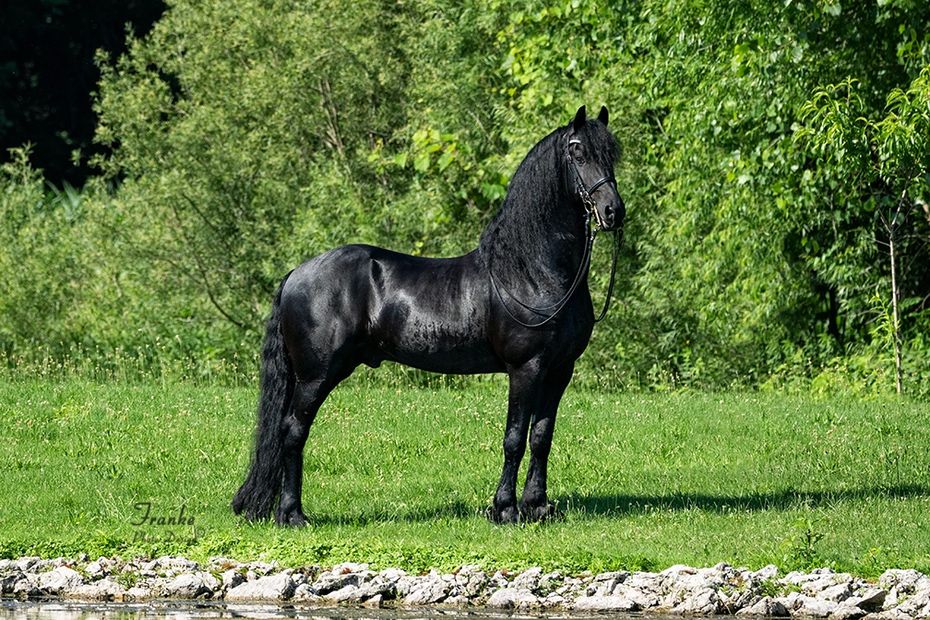
The roots of the Friesian’s movement style go back centuries. Originating in the Friesland region of the Netherlands, these horses were bred for both agricultural work and as carriage horses for nobility. Over time, breeders selected for traits that would make Friesians stand out in harness and ceremonial roles. This included a preference for horses with a naturally elevated, expressive trot.
Selective breeding reinforced the mechanics behind the Friesian’s high-stepping gait. Horses that lifted their knees higher and flexed their hocks more dramatically were favored, as this movement was visually impressive and suited to pulling carriages in parades or formal events. Over generations, these traits became more pronounced, resulting in the characteristic action seen today.
For more on how horses communicate and express themselves through movement, see our article on equine behavior and communication.
Key Physical Traits That Influence High Action
Several anatomical features contribute to the Friesian’s unique way of moving. Let’s break down the most important factors:
- Shoulder Angle: Friesians typically have a sloping shoulder, which allows for greater range of motion in the forelimb. This enables the horse to lift its knees higher during each stride.
- Short, Upright Pasterns: The breed often has shorter, more upright pasterns compared to other horses. This conformation supports the “snappy” action of the lower leg and reduces the tendency for the fetlock to drop, resulting in a more animated step.
- Powerful Hindquarters: Strong, well-muscled hindquarters provide the impulsion needed for an expressive trot. The hocks flex deeply, propelling the horse forward and upward with each stride.
- Neck Set and Head Carriage: Friesians have a high-set neck and naturally arched topline, which helps them balance their elevated movement and maintain a proud, upright posture.
Understanding the Mechanics of the Friesian Trot
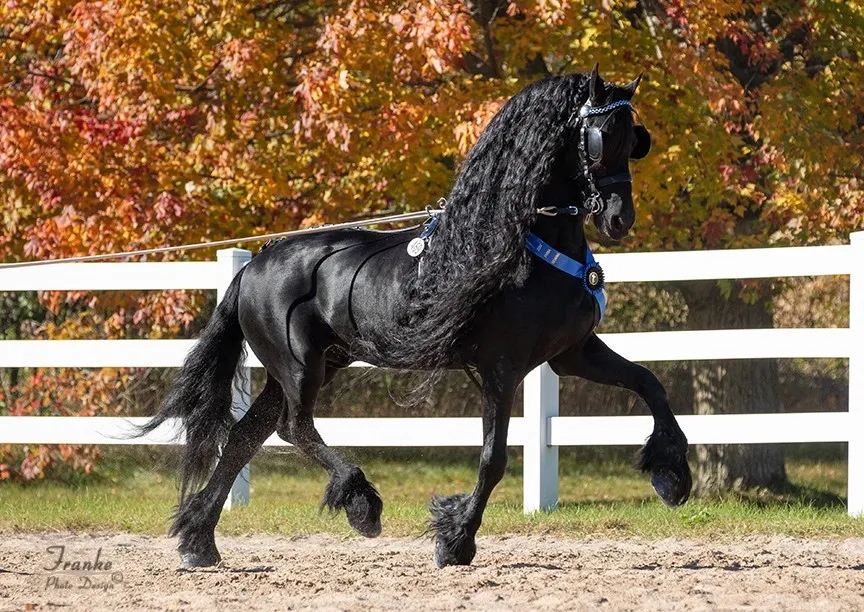
The trot is where the Friesian’s high action is most evident. In this gait, the horse moves its legs in diagonal pairs, creating a two-beat rhythm. What sets Friesians apart is the degree of flexion in their knees and hocks, resulting in a more elevated and expressive stride.
Here’s what happens during each step:
- The foreleg lifts, with the knee bending sharply and the hoof rising higher than in most breeds.
- At the same time, the diagonal hind leg flexes at the hock and stifle, driving the body forward and upward.
- The horse’s back remains relatively steady, supported by the strong topline and core muscles.
- The head and neck are carried high, balancing the movement and adding to the overall impression of power and grace.
This combination of anatomical structure and movement mechanics is the primary reason Friesians display such pronounced knee and hock action. The effect is both functional and aesthetic, making them favorites in driving competitions and show rings.
Genetics and Selective Breeding: The Role of Heritage
While conformation plays a major role, genetics are equally important in explaining why Friesian horses have high action. For centuries, breeders have chosen stallions and mares that naturally exhibit more expressive movement. Over time, these traits have become deeply embedded in the breed’s DNA.
Modern Friesians are still bred with an eye toward movement quality. Judges in breed shows and inspections look for horses that demonstrate the classic, animated trot. This ongoing selection ensures that the high-stepping gait remains a defining feature of the breed.
For more on the conservation and history of this unique horse, see the Livestock Conservancy’s overview of Friesian horses.
Training and Presentation: Enhancing Natural Movement
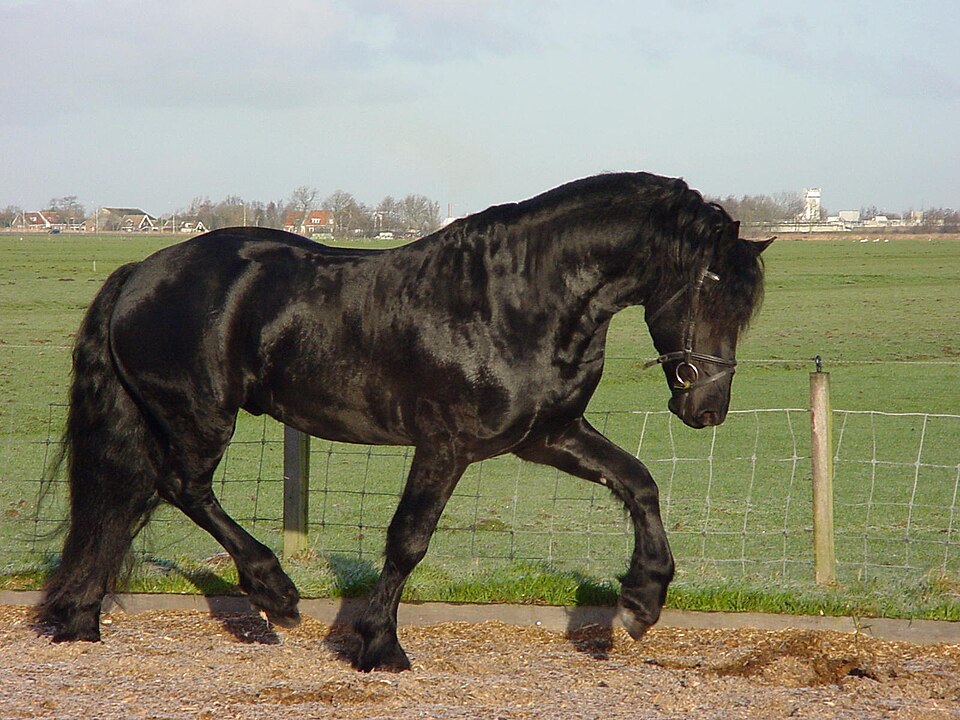
While much of the Friesian’s movement is innate, training and presentation can further enhance their natural action. Handlers and trainers use specific exercises to encourage flexibility, strength, and balance. For example:
- In-hand work: Ground exercises help the horse learn to engage its hindquarters and lift its forelegs.
- Long-lining: This technique develops self-carriage and encourages the horse to move with more elevation.
- Driving practice: Pulling a carriage or working in harness can accentuate the high-stepping motion, especially when combined with proper conditioning and shoeing.
It’s important to note that ethical training respects the horse’s natural abilities and avoids artificial methods that could cause discomfort or injury. For more on responsible horse care, see our resource on horse welfare best practices.
Comparing Friesian Movement to Other Breeds
Many horse breeds have their own signature gaits, but few display the same degree of animation as the Friesian. For example, Arabians are known for their floating trot, while Saddlebreds and Hackneys also exhibit high action, though often with even more extreme knee and hock flexion. What makes Friesians unique is the combination of power, grace, and a slightly slower, more majestic rhythm.
This movement is not just for show—it reflects centuries of purposeful breeding and adaptation to specific roles. Whether in the show ring, on parade, or in harness, the Friesian’s gait is a testament to the breed’s history and versatility.
Frequently Asked Questions
What makes Friesian horses’ gait different from other breeds?
Friesians are known for their high knee and hock action, a result of their unique conformation and centuries of selective breeding. Their sloping shoulders, upright pasterns, and powerful hindquarters all contribute to a more elevated, expressive trot compared to most other horses.
Can training increase the height of a Friesian’s action?
Training can enhance a Friesian’s natural movement, but the foundation is genetic. Exercises that build strength and flexibility, such as in-hand work and long-lining, can help the horse use its body more effectively, but the breed’s characteristic action is largely inherited.
Are there health concerns associated with high-stepping gaits?
While the Friesian’s movement is natural for the breed, excessive or artificially exaggerated action can put strain on joints and tendons. Responsible breeding and training focus on maintaining soundness and comfort, ensuring that the horse’s movement remains both beautiful and healthy.
Conclusion
The striking, high-stepping movement of Friesian horses is the result of a unique combination of anatomy, genetics, and careful breeding. Their expressive gaits are not only visually impressive but also reflect the breed’s rich history and versatility. Understanding the mechanics behind their action helps owners, riders, and admirers appreciate the remarkable qualities that make Friesians stand out in the equine world.
For those looking to deepen their connection with these horses, learning about their movement is just one part of the journey. Explore more how to become a better horse owner and discover ways to support your Friesian’s health and happiness.