

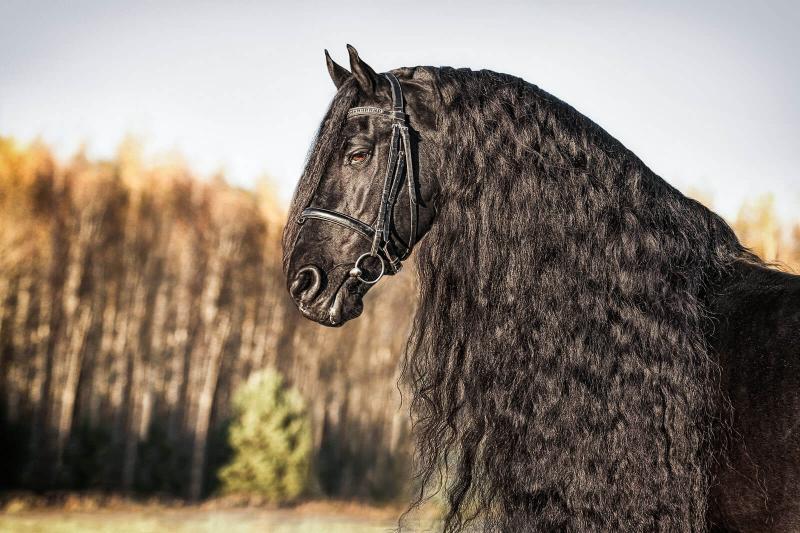
Friesian horses are renowned for their striking black coats, flowing manes, and elegant presence. For centuries, these horses have captured the imagination of equestrians and horse lovers alike. But what makes the Friesian’s coat so consistently black, and why is this trait so closely associated with the breed? Understanding why Friesian horses are black involves delving into the fascinating world of equine genetics, breed standards, and selective breeding practices.
The deep, uniform black color of Friesians is not just a matter of tradition or aesthetics. It is the result of specific genetic factors and careful selection by breeders over generations. In this article, we’ll explore the science behind the Friesian’s coat color, how genetics influence their appearance, and what sets them apart from other horse breeds. If you’re interested in learning more about the breed’s history and characteristics, the complete guide to Friesian horses offers a comprehensive overview.
The Origins of the Friesian’s Distinctive Color
The Friesian breed originated in the Friesland region of the Netherlands, where it developed a reputation for strength, agility, and beauty. While Friesians were not always exclusively black, the modern breed standard emphasizes a pure black coat as a defining characteristic. This preference for black horses became more pronounced in the 20th century, as breeders sought to create a uniform and easily recognizable appearance.
Historically, Friesians could be found in a range of dark colors, including bay and chestnut. However, selective breeding gradually eliminated these variations. Today, the vast majority of Friesians are black, with only a small white star on the forehead allowed by most breed registries.
Genetic Factors That Influence Coat Color
To understand why Friesian horses are black, it’s important to look at the basics of equine coat color genetics. Horse coat color is determined by several genes, with the two primary pigments being eumelanin (black) and pheomelanin (red). The interaction of these pigments, along with various modifying genes, results in the wide range of horse colors seen across breeds.
In Friesians, the black coat is caused by the presence of the dominant “E” allele at the Extension locus (MC1R gene). This gene controls whether a horse produces black or red pigment. Friesians almost always have the genotype “EE” or “Ee,” which means they produce only black pigment. The “A” allele at the Agouti locus (ASIP gene), which restricts black pigment to the points (mane, tail, legs) and allows bay coloring, is either absent or not expressed in Friesians. As a result, the black pigment is distributed evenly across the entire body.
Breed Standards and Selective Breeding
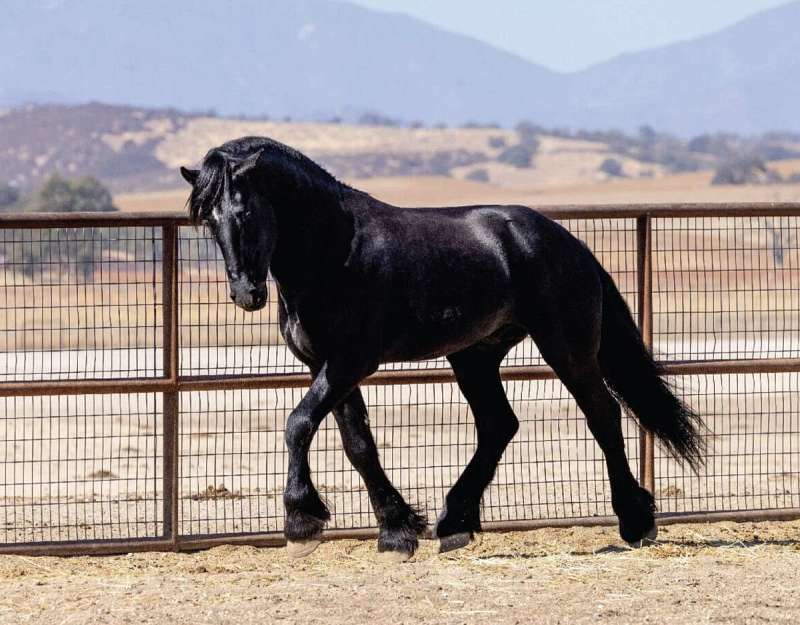
The modern Friesian’s uniform black coat is not just a product of genetics—it’s also the result of strict breed standards. Registries such as the Koninklijke Vereniging “Het Friesch Paarden-Stamboek” (KFPS) require that registered Friesians be black, with minimal white markings. Horses with significant white or non-black coloring are not eligible for registration, which reinforces the prevalence of the black coat in the population.
Selective breeding has played a major role in maintaining and enhancing the black color. Breeders have consistently chosen black-coated horses for breeding, further reducing the likelihood of other colors appearing in the breed. Over time, this has led to a genetic bottleneck, where the vast majority of Friesians carry only the genes for black coats.
Occasional Color Variations in Friesians
Although rare, color variations can still occur in Friesians. Some horses may be born with a small white star on the forehead, which is permitted by most breed standards. More unusual are the so-called “chestnut Friesians,” which result from a recessive gene that can occasionally appear if both parents carry it. However, these horses are not eligible for registration with the main Friesian studbooks.
Environmental factors can also influence the appearance of a Friesian’s coat. Prolonged exposure to sunlight may cause the black hair to fade or develop a reddish tinge, a phenomenon known as “sun bleaching.” Proper grooming and care can help maintain the deep black color that is so highly prized.
Comparing Friesians to Other Black Horse Breeds
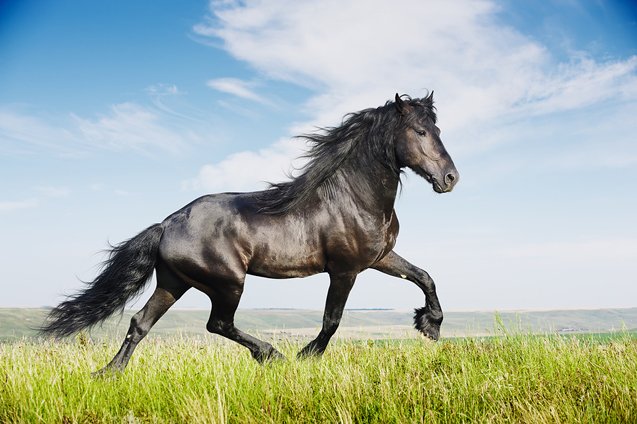
While Friesians are famous for their black coats, they are not the only breed to display this color. Other breeds, such as the Percheron and Andalusian, can also be black. However, what sets Friesians apart is the consistency and purity of their coloring, combined with their unique conformation and movement.
Unlike some breeds where black is just one of many possible colors, the Friesian’s identity is closely tied to its dark coat. This has made them especially popular in film, parades, and ceremonial roles, where their dramatic appearance stands out. For those interested in the versatility and athleticism of Friesian sport horses, the article Friesian sport horses: beauty, power, and competition potential provides further insights.
Maintaining the Friesian’s Black Coat
Caring for a Friesian’s coat requires attention to detail and regular grooming. Dust, sweat, and sun exposure can all impact the appearance of the black hair. Owners often use specialized shampoos and conditioners designed for dark coats, as well as grooming kits that help remove dirt and enhance shine.
Regular grooming not only keeps the coat looking its best but also promotes healthy skin and a strong bond between horse and handler. For more tips on daily care and responsibilities, the article on horse ownership responsibilities is a helpful resource.
Frequently Asked Questions
Are all Friesian horses born black?
Most Friesians are born with a dark coat, which may appear brownish at first but typically turns jet black as the foal matures. Some foals may have a small white star, but other colors are extremely rare due to strict breeding standards.
Can Friesians have other coat colors?
While the vast majority of Friesians are black, a recessive gene can occasionally produce a chestnut-colored horse. However, these individuals are not accepted by main breed registries and are considered outside the standard.
How do I keep my Friesian’s coat shiny and black?
Regular grooming, proper nutrition, and protection from excessive sun exposure are key. Using products formulated for dark coats and maintaining a consistent grooming routine can help preserve the rich black color.
Conclusion
The answer to why Friesian horses are black lies in a combination of genetics, breed standards, and careful selection by dedicated breeders. The result is a horse that is not only visually stunning but also a testament to the power of selective breeding and genetic inheritance. Whether admired in the show ring or at home in the pasture, the Friesian’s black coat remains one of the most iconic and enduring symbols of the breed.
For those looking to deepen their understanding of equine behavior, equine behavior and communication is another valuable topic to explore.