

Maintaining a horse’s health goes beyond regular feeding and exercise. One of the most overlooked yet essential aspects of equine care is keeping the nostrils clean. Proper nose cleaning is a vital part of horse grooming that supports respiratory health, prevents infections, and ensures overall comfort for your animal. This article provides a comprehensive overview of safe and effective nose cleaning practices, as well as tips for integrating this step into your regular grooming routine.
Whether you’re a new horse owner or an experienced handler, understanding the importance of nasal hygiene can make a noticeable difference in your horse’s well-being. Alongside brushing, hoof care, and mane maintenance, cleaning the nostrils should be a regular part of your grooming checklist. For those interested in broader safety measures, you might also want to learn about how to find the right riding helmet for your head shape to ensure both you and your horse are protected during rides.
Why Nose Cleaning Matters in Horse Grooming
The nostrils are a horse’s primary gateway for breathing and are exposed to dust, pollen, hay particles, and other debris daily. Without regular cleaning, these particles can accumulate, leading to irritation, respiratory issues, or even infections. Horses with allergies or those kept in dusty environments are especially prone to nasal buildup.
Incorporating horse grooming nose cleaning into your routine helps:
- Reduce the risk of respiratory infections
- Prevent blockages that can cause discomfort or labored breathing
- Spot early signs of illness, such as unusual discharge or swelling
- Enhance overall comfort and performance
Essential Tools for Safe Nose Cleaning
Before you begin, gather the right supplies to ensure a gentle and effective cleaning process. The following items are recommended:
- Soft, clean sponges or cloths: Avoid anything abrasive that could irritate delicate nasal tissue.
- Warm water: Helps loosen dirt and mucus for easier removal.
- Disposable gloves: Optional, but useful for hygiene and to prevent the spread of germs.
- Grooming kit: Many comprehensive kits include sponges and other tools designed for sensitive areas.
For those looking to upgrade their grooming supplies, consider investing in a dedicated kit designed for equine care. This ensures you always have the proper tools on hand for every aspect of grooming, including nose cleaning.
Step-by-Step Nose Cleaning Process
Cleaning your horse’s nostrils is a straightforward process when done with care and patience. Follow these steps for optimal results:
- Prepare your horse: Secure your horse in a calm environment. Approach gently and let your horse see and smell the cleaning tools before starting.
- Moisten the sponge or cloth: Dip a soft sponge or cloth in warm water. Wring out excess water to avoid drips.
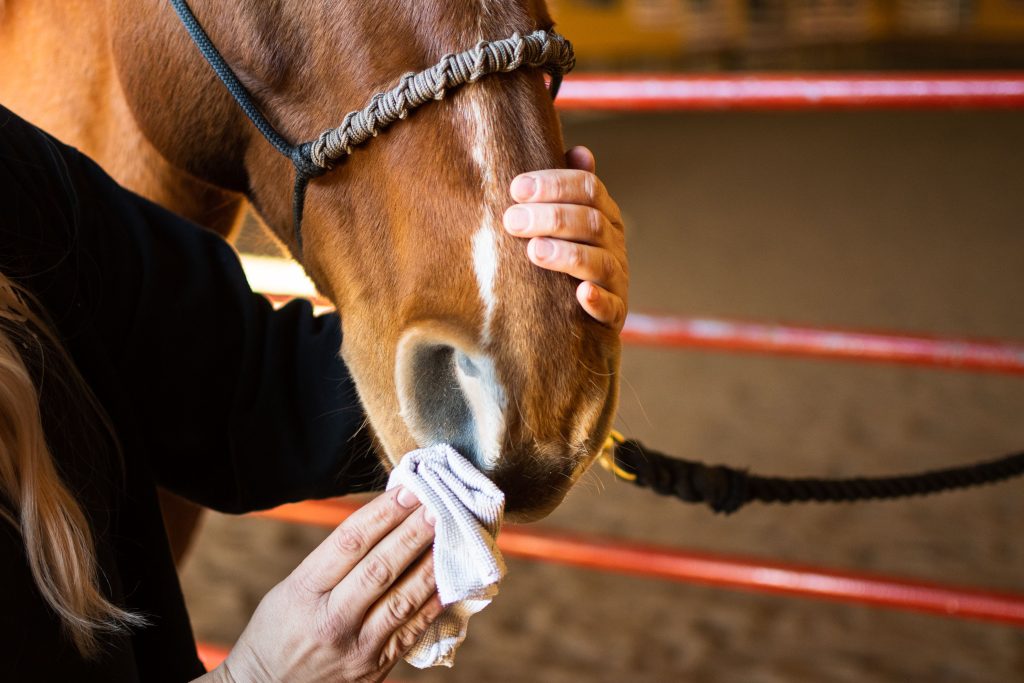
- Wipe the nostrils: Gently wipe around the outside of each nostril, removing visible dirt and mucus. Use a separate area of the sponge for each nostril to prevent cross-contamination.
- Check for abnormalities: While cleaning, observe for signs of redness, swelling, unusual discharge, or foul odor. These could indicate infection or other health issues.
- Dispose or clean tools: If using disposable materials, throw them away after use. If using reusable sponges, wash them thoroughly before the next use.
Never insert anything deep into the nostrils, as this can cause injury or distress. The goal is to clean only the visible, accessible areas.
Integrating Nose Cleaning Into Your Grooming Routine
Consistency is key to maintaining your horse’s nasal hygiene. For most horses, a quick wipe of the nostrils during each grooming session is sufficient. Horses exposed to dusty environments or those with allergies may benefit from more frequent attention.
Pair nose cleaning with other essential tasks such as brushing, hoof picking, and mane care. This not only streamlines your routine but also helps you monitor your horse’s health more closely. For a complete grooming process, you can follow a step-by-step guide to grooming your horse that covers all aspects of equine care.
Common Mistakes to Avoid During Nose Cleaning
While nose cleaning is a simple task, mistakes can lead to discomfort or even harm. Avoid these common errors:
- Using harsh or dirty materials: Always use clean, soft sponges or cloths. Never use brushes or abrasive tools.
- Applying excessive force: Gentle wiping is sufficient. Pressing too hard can cause irritation.
- Neglecting to check for signs of illness: Take the opportunity to observe for any abnormalities during cleaning.
- Skipping regular cleaning: Infrequent cleaning can allow buildup and increase the risk of infection.
By avoiding these pitfalls, you help ensure your horse’s comfort and health.
Signs of Nasal Problems and When to Call a Vet
Routine cleaning not only keeps your horse comfortable but also helps you spot potential health issues early. Be alert for the following warning signs:
- Persistent or thick nasal discharge
- Foul odor from the nostrils
- Swelling or redness around the nose
- Labored breathing or unusual sounds
- Frequent sneezing or coughing
If you notice any of these symptoms, consult your veterinarian promptly. Early intervention can prevent more serious complications and ensure your horse’s continued well-being.
Additional Tips for Comprehensive Horse Hygiene
While nasal hygiene is crucial, it’s just one part of a broader care regimen. Regular grooming sessions help maintain your horse’s coat, hooves, and overall health. For those interested in other safety and care topics, you might also explore the importance of a secure helmet retention system for rider safety or learn about the difference between UK and US riding standards to stay informed about best practices.
Remember, a well-groomed horse is not only healthier but also happier and more responsive during rides and training sessions.
Frequently Asked Questions
How often should I clean my horse’s nostrils?
For most horses, a gentle wipe during each grooming session is sufficient. Horses in dusty environments or those with allergies may require more frequent attention. Monitor your horse’s nostrils regularly and adjust as needed.
What should I do if my horse resists nose cleaning?
Start by introducing the cleaning tools slowly and let your horse become familiar with them. Use gentle, reassuring movements and reward your horse for cooperation. If resistance continues, consult a trainer or equine behaviorist for guidance.
Can I use commercial wipes or sprays for nose cleaning?
It’s best to use plain, soft sponges or cloths with warm water. Some commercial wipes are safe, but always check the ingredients and consult your veterinarian before using any new product on sensitive areas like the nostrils.
Is nose cleaning necessary for all horses?
While some horses may naturally keep their nostrils clean, regular inspection and gentle cleaning help prevent buildup and catch early signs of health issues. It’s a good practice for all horses, regardless of age or environment.
By making horse grooming nose cleaning a regular part of your care routine, you support your horse’s health and comfort. With the right tools, gentle technique, and consistent attention, you’ll ensure your horse breathes easy and stays happy for years to come.