

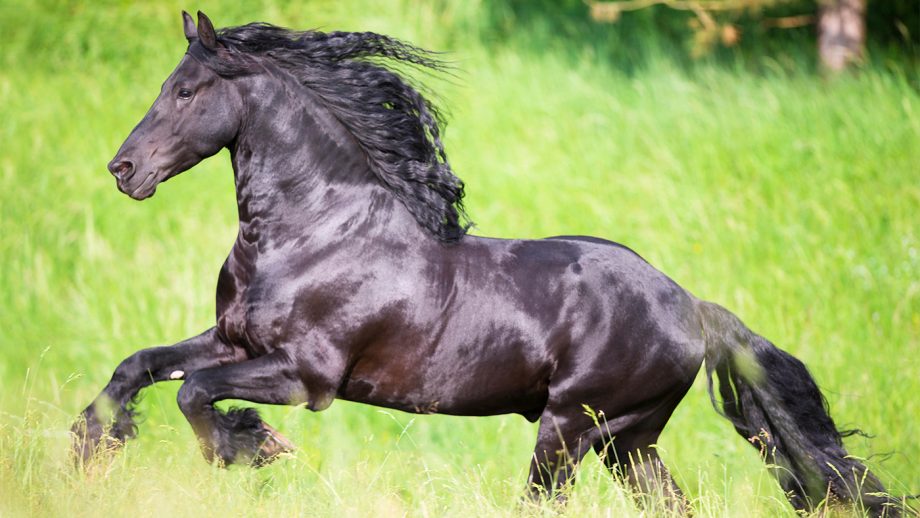
The Friesian horse is renowned for its striking appearance, but it is the breed’s distinctive movement that truly sets it apart. Understanding the unique qualities of the Friesian’s walk, trot, and canter helps riders, trainers, and enthusiasts appreciate what makes this breed so special. In this guide, the Friesian horse gait explained will focus on the natural movement patterns, breed standards, and what to look for in each of the three primary gaits.
Whether you are a seasoned equestrian or just beginning to explore the world of Friesians, learning about their movement is key to recognizing quality, ensuring proper training, and enjoying the breed’s full potential. For a broader look at the breed’s history, temperament, and care, you might find the complete guide to Friesian horses helpful as well.
Understanding the Friesian’s Natural Movement
Friesians are known for their expressive, animated movement. Their gaits are characterized by high knee action, powerful impulsion from the hindquarters, and a proud carriage of the head and neck. These traits are not only visually impressive but also reflect the breed’s historical use in both riding and driving disciplines.
Breed standards emphasize purity and regularity of movement. Judges and breeders look for a rhythmic, energetic stride that is both elegant and functional. The Friesian horse gait explained in detail reveals how each gait contributes to the breed’s versatility and appeal.
Walk: The Foundation of Friesian Movement
The walk is the most basic gait, but in Friesians, it is anything but ordinary. A quality walk should be:
- Four-beat rhythm: Each hoof hits the ground independently, creating a steady, even cadence.
- Long stride: The horse should reach well under its body with each step, showing suppleness through the back.
- Relaxed yet energetic: The walk must be forward and purposeful, not sluggish or tense.
- Head and neck position: The Friesian’s head is carried high, with a gentle arch in the neck, giving an air of nobility.
In the show ring, judges look for a walk that covers ground efficiently, with clear overtrack (the hind hoof steps past the print of the front hoof). A choppy or lateral walk is considered a fault. The breed’s natural animation is still present, but the movement should remain smooth and fluid.
Trot: The Signature Gait of the Friesian
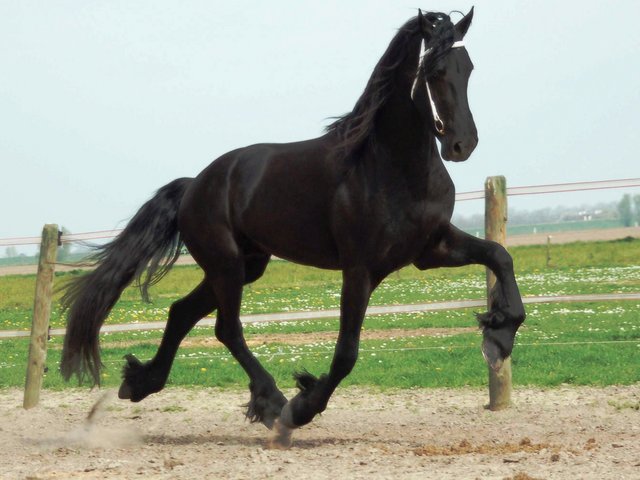
The trot is where the Friesian’s movement truly shines. This gait is often the highlight in breed shows and exhibitions. Key features include:
- Two-beat diagonal gait: Opposite front and hind legs move together, creating a springy, balanced rhythm.
- High knee action: The breed’s most recognizable trait, with the forelegs lifted well off the ground in each stride.
- Suspension: There is a moment of “air time” when all four feet are off the ground, adding to the dramatic effect.
- Powerful impulsion: The hindquarters drive the horse forward, resulting in an energetic, forward-moving trot.
- Upright carriage: The head and neck are carried proudly, with a natural arch and relaxed poll.
While the trot should be expressive, it must not become exaggerated or artificial. Excessive knee action that disrupts rhythm or balance is discouraged. Instead, the ideal Friesian trot is both athletic and elegant, suitable for dressage, driving, and recreational riding.
For more on how Friesians communicate through movement and body language, the article on equine behavior and communication offers valuable insights.
Canter: Balance and Grace in Motion
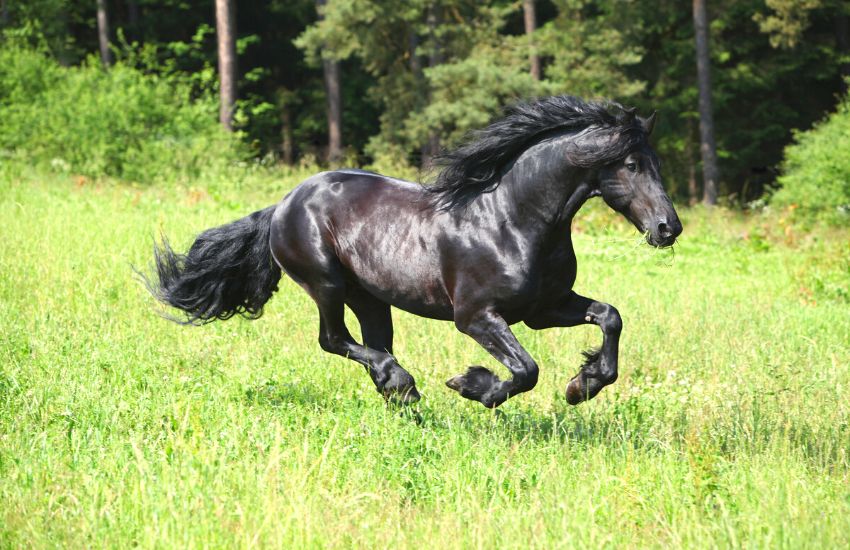
The canter in Friesians is smooth, collected, and balanced. While not as flashy as the trot, it is still a vital gait for riding and performance. Characteristics of the Friesian canter include:
- Three-beat rhythm: The sequence of footfalls creates a rocking, rhythmic motion.
- Upright posture: The horse maintains a proud, elevated head and neck position.
- Collected movement: Friesians tend to have a naturally collected canter, with less extension than some lighter breeds.
- Calm and controlled: The canter should be steady, not rushed or unbalanced.
Because Friesians are built with a strong, upright frame, their canter may appear more “uphill” than that of other breeds. This makes them well-suited for classical dressage and other disciplines that value collection and self-carriage.
Breed Standards and Judging Criteria
Breed organizations have clear standards for evaluating Friesian movement. Judges look for purity of gait, regularity, impulsion, and correct use of the body. Faults may include:
- Pacing or lateral movement at the walk
- Irregular rhythm or loss of suspension at the trot
- Disunited or four-beat canter
- Stiffness, lack of impulsion, or restricted movement
Proper training and conditioning are essential to develop and maintain the ideal movement. Regular exercise, correct shoeing, and thoughtful riding all contribute to a Friesian’s ability to perform at its best.
For a deeper dive into the breed’s conformation and movement, the Friesian horse breed profile provides additional details and expert analysis.
Training Tips for Enhancing Friesian Gaits
To bring out the best in a Friesian’s movement, consider these practical tips:
- Start with groundwork: Lunging and in-hand work help develop balance and responsiveness.
- Focus on rhythm and relaxation: Encourage a steady tempo and a relaxed frame at all gaits.
- Use transitions: Frequent changes between walk, trot, and canter improve engagement and attentiveness.
- Incorporate lateral work: Leg-yields and shoulder-in exercises build suppleness and strength.
- Reward correct movement: Positive reinforcement helps the horse understand and repeat desirable actions.
Consistent, patient training will help your Friesian develop the expressive, correct movement that defines the breed. For more on building a strong partnership with your horse, see advice on how to become a better horse owner.
Common Questions About Friesian Gaits
Are Friesians Naturally Gaited Horses?
No, Friesians are not considered “gaited” in the sense of breeds like Tennessee Walkers or Paso Finos. They perform the standard walk, trot, and canter, but with distinctive style and animation.
Why Is the Trot So Important for Friesians?
The trot showcases the breed’s signature movement, with high knee action and suspension. It is the most celebrated gait in shows and is a key indicator of quality in breeding and performance.
How Can I Improve My Friesian’s Movement?
Regular, varied exercise, proper nutrition, and attention to hoof care are essential. Work with a knowledgeable trainer to develop rhythm, balance, and impulsion in all gaits.
Conclusion
Understanding the Friesian horse gait explained in this article provides valuable insight into what makes this breed so captivating. From the energetic walk to the dramatic trot and balanced canter, Friesians offer a unique combination of beauty and athleticism. With proper care and training, their movement can be developed to its full potential, whether for the show ring, dressage arena, or pleasure riding.
For those interested in the broader welfare and humane care of Friesians and other horses, the resource on horse welfare best practices is highly recommended. And if you’re curious about the breed’s popularity in film and television, explore the Friesian horse in movies and media for fascinating examples of their star power.