Keeping your horse healthy and comfortable starts with a consistent grooming routine. A well-structured horse grooming checklist ensures your equine companion stays clean, comfortable, and free from skin issues or irritants. Whether you’re a new horse owner or looking to refine your care routine, understanding the essentials of daily and weekly grooming is key for your horse’s wellbeing.
Regular grooming not only improves your horse’s appearance but also strengthens the bond between you and your animal. It helps you spot minor injuries, skin conditions, or signs of discomfort early. For those interested in managing pests, you might also want to explore horse grooming for fly control as part of your broader care strategy.
Why a Structured Grooming Routine Matters
A regular care schedule is more than just keeping your horse looking good. It’s about maintaining skin health, preventing infections, and ensuring your horse is comfortable in all seasons. By sticking to a daily and weekly plan, you’ll also have the chance to check for ticks, cuts, or swelling that might otherwise go unnoticed.
Consistency is especially important during shedding seasons or when your horse is exposed to mud, dust, or insects. A thorough approach helps minimize the risk of skin issues and keeps your horse’s coat shiny and healthy.
Essential Tools for Your Grooming Kit
Before starting, make sure you have the right equipment. A well-stocked kit makes the process smoother and more effective. Here are the basic items every horse owner should have:
- Curry comb – Loosens dirt, mud, and shedding hair.
- Hard brush (dandy brush) – Removes larger debris from the coat.
- Soft brush (body brush) – Smooths the coat and removes finer dust.
- Mane and tail comb – Detangles hair gently.
- Hoof pick – Cleans out hooves and checks for stones or debris.
- Sponge or cloth – Wipes sensitive areas like the face and dock.
- Shedding blade or grooming block – Useful during shedding season.
- Fly spray – Optional, but helpful for pest control.
For a more detailed breakdown of products, you can refer to this beginner’s guide to horse grooming.
Daily Horse Grooming Checklist
Incorporating a daily care routine helps keep your horse’s coat and skin in top condition. Here’s a step-by-step list for everyday maintenance:
- Secure your horse in a safe, quiet area using cross-ties or a lead rope.
- Pick out hooves to remove dirt, stones, and manure. Check for cracks, thrush, or injuries.
- Curry comb the body in circular motions to loosen dirt and stimulate skin oils.
- Use a hard brush to sweep away debris lifted by the curry comb.
- Follow with a soft brush for a smooth, shiny finish and to remove fine dust.
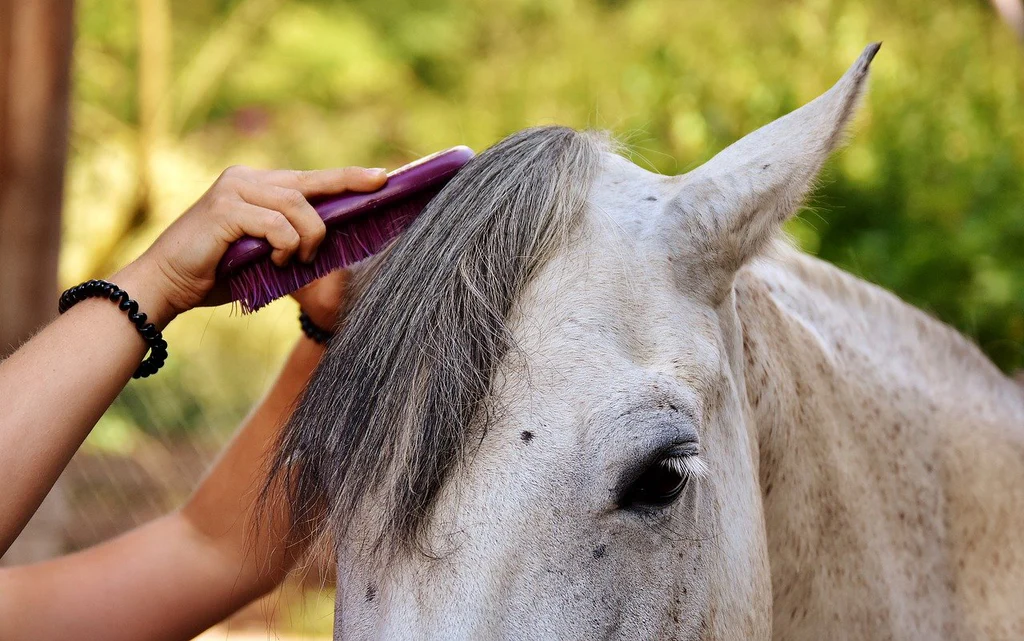
- Detangle mane and tail gently, starting at the ends and working upward.
- Wipe face and sensitive areas with a damp sponge or cloth.
- Check for injuries or irritations as you groom, paying attention to legs, belly, and girth area.
- Apply fly spray if needed, especially in warmer months.
Weekly Deep Cleaning Tasks
In addition to daily care, a weekly routine helps address areas that require extra attention. This is the time to focus on deeper cleaning and maintenance tasks:
- Thoroughly clean hooves, checking for signs of thrush or other hoof issues.
- Wash mane and tail with a mild shampoo if needed. For tips on choosing the right product, see our horse shampoo guide.
- Inspect and clean tack areas (girth, bridle path, saddle area) for sweat build-up or sores.
- Use a shedding blade during seasonal coat changes to remove excess hair.
- Condition mane and tail to prevent breakage and keep hair healthy.
- Wipe down legs and underbelly to remove mud or sweat that daily brushing may miss.
- Check for skin conditions like rain rot, fungal infections, or parasites.
- Assess overall coat health and adjust diet or supplements if the coat appears dull.
Tips for a Healthy, Shiny Coat
Achieving a glossy, healthy coat goes beyond brushing. Here are some practical tips to enhance your horse’s appearance and comfort:
- Feed a balanced diet rich in essential fatty acids and vitamins.
- Ensure regular exercise to promote circulation and skin health.
- Keep grooming tools clean to avoid spreading dirt or bacteria.
- Use appropriate grooming products for your horse’s coat type and skin sensitivity.
- Bathe your horse occasionally, especially before shows or during heavy shedding. For guidance, see our article on how to bathe a horse.
- Monitor for changes in coat texture, color, or thickness, as these can signal health issues.
Common Mistakes to Avoid
Even experienced owners can overlook certain aspects of grooming. Here are a few pitfalls to watch out for:
- Skipping daily checks for hooves and skin, which can lead to missed injuries or infections.
- Using dirty or worn-out brushes that can irritate the skin or spread bacteria.
- Neglecting sensitive areas like the face, dock, and underbelly.
- Brushing too aggressively, especially on thin-skinned horses.
- Over-bathing, which can strip natural oils and dry out the coat.
For more advanced tips on achieving a brilliant shine, check out our guide on horse grooming for shiny coat.
Frequently Asked Questions
How often should I groom my horse?
Daily grooming is ideal for most horses, especially those in regular work or turnout. At a minimum, check hooves and brush the coat several times a week to maintain health and comfort.
What should I do if my horse has sensitive skin?
Use soft brushes and avoid harsh grooming products. Test new shampoos or sprays on a small area first, and consult your vet if you notice persistent irritation. You can also refer to our best shampoo for horses article for product recommendations.
Can grooming help with fly control?
Yes, regular brushing removes sweat and debris that attract flies. Applying fly spray after grooming and keeping the coat clean can significantly reduce pest problems. For more strategies, see our resource on horse grooming for fly control.